

The finish that best hides wall flaws may not hold up best to frequent cleaning. In Knoxville homes, the right painting finishes choices depend on room use, moisture, surface condition, and the look you want. Flat or matte can soften imperfections in dry, low-traffic rooms, while eggshell is easier...
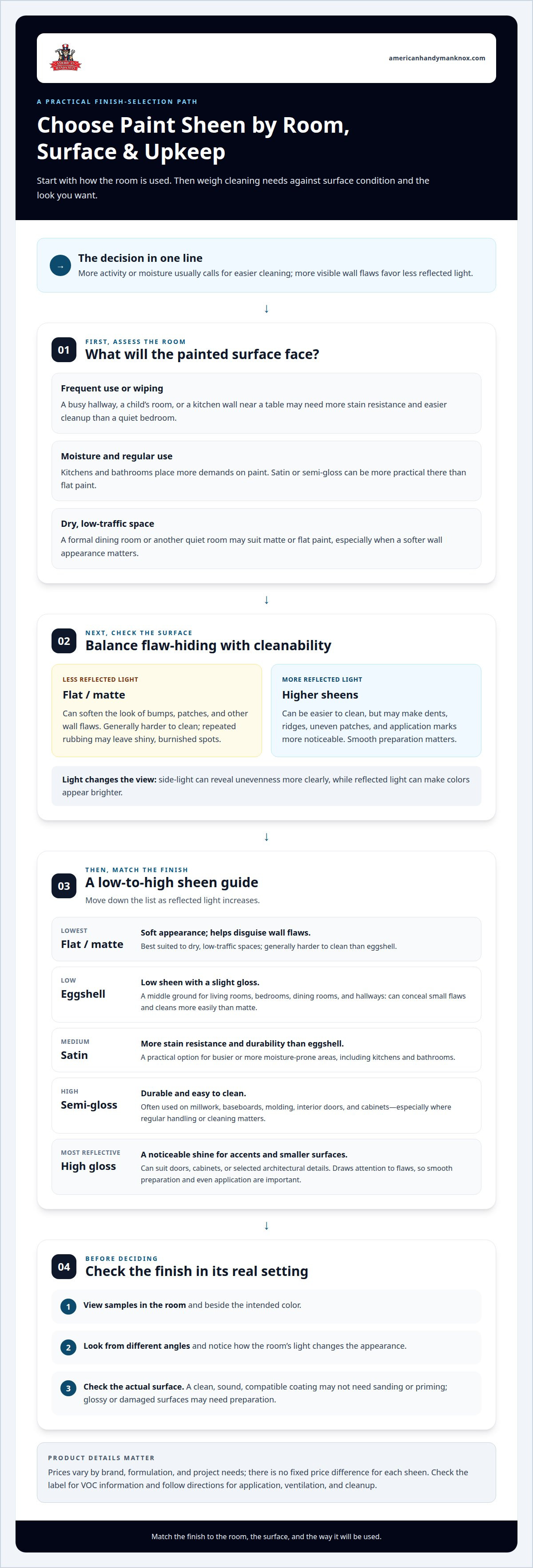
The finish that best hides wall flaws may not hold up best to frequent cleaning. In Knoxville homes, the right painting finishes choices depend on room use, moisture, surface condition, and the look you want. Flat or matte can soften imperfections in dry, low-traffic rooms, while eggshell is easier to clean. Satin and semi-gloss suit busier or more moisture-prone areas, and gloss adds a brighter sheen to trim and details.
It’s easy to focus on color first, but sheen affects both a painted surface’s appearance and how it handles everyday use. A finish that works well in a bedroom may be less practical in a kitchen or bathroom.
This guide compares flat, matte, eggshell, satin, semi-gloss, gloss, and less familiar options such as pearl, velvet, and low-lustre. You’ll learn which finishes suit common rooms and surfaces, how sheen reveals or softens flaws, and what to consider before choosing.
Key Takeaways
• Choose sheen with room activity and moisture in mind; a finish that works in a quiet bedroom may not suit a kitchen or bathroom.
• Flatter finishes can soften the look of wall flaws, while glossier options tend to make surface preparation more important.
• Match trim, doors, and other details to finishes that balance cleanability with the look you want.
• Consider pearl, velvet, and low-lustre alongside familiar sheens, since their appearance and upkeep differ.
• Compare how a finish looks on the actual surface and in the room’s light before settling on your choice.
What Paint Finish Should I Use for Every Room?
Choose a finish based on room traffic, moisture, and cleaning needs. A quiet bedroom and a frequently used kitchen place different demands on painted walls.
Sheen, Durability, and Moisture
Sheen describes how much light paint reflects, helping you judge appearance and upkeep. Kitchens and bathrooms face moisture and regular use, so satin or semi-gloss can be more practical there than flat paint.
In living rooms, bedrooms, and hallways, eggshell offers a soft appearance and is easier to clean than matte. Household routines matter, too: a hallway used by children may need more frequent wiping than a quiet dining room. Consider each room separately rather than using one finish throughout the home.
Eggshell and Matte Performance
Eggshell has a low sheen with a slight gloss. It suits living rooms, bedrooms, dining rooms, and hallways, and can conceal small wall flaws while cleaning more easily than matte. It can be a useful middle ground for a guest bedroom that needs occasional cleaning but not frequent scrubbing.
Matte or flat reflects little light and can soften the look of wall flaws, but it’s generally harder to clean. Repeated rubbing may leave shiny, burnished spots. Some matte paints withstand frequent washing, but this finish is best suited to formal dining rooms and other dry, low-traffic spaces.
Durability and Cleanability
Durability describes how well paint withstands wear; cleanability describes how it responds to washing. A kitchen wall near a table, for example, may need more stain resistance than a low-traffic bedroom wall.
Satin generally offers more stain resistance and durability than eggshell. Semi-gloss and gloss are easier to clean, making them useful on trim and frequently touched surfaces. For a child’s room, consider how often the walls need wiping. A higher sheen can make cleanup easier, but it may also reveal more surface flaws.
Finish Costs and Premium Options
Paint prices vary by product, and premium finishes can cost more. There’s no fixed price difference for each sheen: brand, formulation, and project needs all affect the total. Compare products by their stated finish and intended use rather than assuming a higher price guarantees better performance in every room.
Consider low-VOC and other health factors before painting. Read the paint label for VOC information and follow its directions for application, ventilation, and cleanup. A washable product may suit a busy hallway, while a different formulation may fit a quiet bedroom. Match the product to the room’s needs instead of choosing by price or sheen alone.
Differences among flat, matte, satin, semi-gloss, and gloss
Finishes differ in reflected light, surface appearance, and application requirements. Good painting-finish choices account for the walls, trim, and light in each room. You can sometimes paint over an existing finish without sanding or priming if the old coating is clean, sound, and compatible. Glossy or damaged surfaces may need preparation first.
Sheen, Reflected Light, and Color
Sheen describes how much light a painted surface reflects, which affects how colors look. Flat paint reflects little light, and matte has very low sheen. Both can make a wall color appear softer, especially in a room with strong daylight.
Satin has medium sheen, semi-gloss has high sheen, and high gloss is very reflective. Greater reflection can make colors appear brighter in direct light. A wall near a window may therefore look different from a shaded wall painted in the same color.
View samples in the room where you’ll use them. Check them beside the intended color and from different angles. Light striking a wall from the side can reveal unevenness more clearly than light falling directly on it.
High-Gloss Uses and Application
High gloss is often reserved for accents and smaller surfaces rather than entire walls. It can give interior doors, cabinets, or a selected architectural detail a noticeable shine against a less reflective background.
That reflection also draws attention to dents, ridges, and other surface flaws. Smooth preparation and even application help prevent bumps or inconsistent coverage from standing out. A well-prepared door can make a crisp accent, while an uneven wall may look more irregular in the same sheen.
Because high gloss can be harder to apply neatly, the finished look depends on both the surface and the application. Consider the area’s size and how closely people will see it before choosing this reflective finish.
Semi-Gloss on Millwork and Cabinets
Semi-gloss is commonly used on millwork, baseboards, molding, and interior doors. Its sheen can contrast with walls and draw attention to trim details. It’s also durable and easy to clean, which makes it useful on surfaces that receive regular handling.
Cabinets are another possible use, particularly when routine cleaning matters. Semi-gloss reflects more light than satin, so surface condition remains important. A smooth cabinet door can show a neat, defined finish; uneven areas may become more noticeable.
Consider both the result you want and the surface’s condition. Semi-gloss can emphasize architectural details and make cleaning easier, while lower-sheen paint reflects less light. Comparing samples on the actual trim or cabinet helps you judge the balance before choosing.
Using flatter finishes to hide surface imperfections
A flatter finish can make an uneven wall look calmer because it reflects less light. The result still depends on the surface, so consider both sheen and preparation before choosing paint.
Sheen and Surface Imperfections
Sheen affects how clearly light reveals bumps, patches, and other surface flaws. Flat or matte paint reflects little light, helping soften the contrast around a shallow dent or repaired area.
Eggshell has slightly more sheen, so it can reveal a little more unevenness. Satin reflects even more light, making careful preparation important before using it on a wall with visible patches. For example, under side light, a hallway wall with uneven repairs may look smoother in matte than in satin.
Look at the wall from the main viewing angles, including beside a window. A flaw that seems faint in soft light may stand out when daylight falls across the surface.
Preparation and Visible Imperfections
Surface preparation addresses physical flaws before paint adds color and sheen. Filling a dent and smoothing a raised patch can reduce shadows that may remain visible even beneath flat paint.
Check a wall in direct and indirect light, paying particular attention to where repairs meet the original surface. A rough edge around a filled nail hole, for example, can catch the light after painting. A flatter finish may be more forgiving to apply, but it can’t hide a raised ridge or deep gouge.
Choose a finish with the wall’s condition in mind. If the surface has small irregularities, flat or matte can soften their appearance. If you prefer eggshell or satin, smooth the surface carefully first, since the added sheen can make uneven repairs easier to notice.
For a practical comparison, view finish samples beside the actual wall rather than judging them on their own. Check them near repaired areas and in the room’s natural light. A small test patch can show whether the sheen emphasizes a surface mark before you paint the entire wall.
Consider how the room is used, too. In a low-traffic room, a flatter finish may be a reasonable tradeoff if hiding imperfections matters most. In an area that needs frequent cleaning, weigh that smoother appearance against the finish’s cleaning requirements. Match the surface condition, desired look, and everyday use.
Paint won’t fix structural damage or an ongoing source of moisture. For ordinary wall flaws, however, thoughtful preparation and a low-sheen finish can reduce their visibility without disguising the wall’s character.
Choosing finishes for bedrooms and living rooms
Room use can matter as much as appearance. A quiet bedroom, a busy family room, and a steamy bathroom put different demands on painted walls.
Start with the room’s traffic, moisture, and cleaning needs. Then consider how the finish’s sheen suits the surface and the mood you want. A restful bedroom may benefit from a softer look, while a kitchen wall needs to withstand more frequent cleaning.
Bedrooms: Flat or matte can suit adult bedrooms with low traffic and little moisture. These finishes soften minor wall flaws and can help a room feel calm. Eggshell is another option, especially if you want a little more sheen and easier cleaning than matte. Velvet is also recommended for bedrooms and other non-moisture areas, though it isn’t ideal for regular, easy cleaning.
Living rooms: Eggshell works well in living rooms, balancing low sheen with easier cleaning than matte. In a formal living room with limited activity, flat or matte may suit the look you want. In a busier family room, consider how often the walls need cleaning. Some matte paints withstand frequent washing, but not every low-sheen surface handles repeated rubbing well.
Hallways: These spaces often see regular contact and cleaning. Eggshell offers a practical middle ground, while satin is another option when greater durability is needed. A narrow hallway with frequent handprints may need more cleanability than a low-traffic den.
Kitchens and bathrooms: Satin suits rooms with activity or moisture, including kitchens and bathrooms. Semi-gloss is also commonly used in these rooms and is durable and easy to clean. For a kitchen wall near everyday cooking, stain resistance and wiping needs may matter more than a perfectly flat look. Flat paint may struggle in a bathroom, where moisture and cleaning are part of everyday use.
High-humidity spaces: Choose a finish suited to moisture rather than relying on a soft, flat appearance. Satin or semi-gloss can be a better fit for a bathroom than flat paint. The same principle applies to laundry rooms, where satin is recommended and regular use can make cleanability important.
You don’t need to use one sheen throughout the home. For example, eggshell in a living room, satin in a kitchen, and matte in an adult bedroom can suit each room’s needs while keeping the choices simple.
Additional finishes, including pearl, velvet, and low-lustre
Pearl, velvet, and low-lustre labels give homeowners more options than the familiar flat-to-gloss scale. Their sheen and cleaning qualities can vary, so compare each product’s finish description with the room’s use and surface condition.
Pearl usually has a subtle luster, reflecting more light than a flat finish but less than semi-gloss. Pearl finishes can resist stains and wear better than lower-sheen choices, making them worth considering for surfaces that need some cleanability. However, pearl can show lap marks and other application flaws more readily. On broad walls, uneven application may be more noticeable than on a small, detailed surface.
For example, pearl may suit a well-prepared wall where a gentle glow is welcome, but it’s less forgiving of visible application marks. View the surface from different angles before choosing. If the wall has uneven patches, reflected light may make them stand out. The tradeoff is subtle luster and greater stain resistance in exchange for more demanding application.
Velvet is a softer-looking option recommended for bedrooms, living rooms, hallways, and other non-moisture areas. It’s slightly more washable than flat paint, but it isn’t ideal for regular, easy cleaning. Velvet may suit a living room where occasional marks matter but frequent scrubbing isn’t expected.
In a hallway with regular hand contact, consider how often the walls need cleaning before choosing velvet. It’s more washable than flat paint, but it isn’t a highly cleanable finish. In an adult bedroom or low-traffic sitting area, that limitation may matter less than the softer look.
Low-lustre describes a low-sheen appearance, though the exact look depends on the product. Low-sheen and pearl paints can offer subtle luster and greater stain resistance than flatter finishes. A product’s finish label and care directions help clarify its intended use. Don’t assume that every low-lustre paint cleans as easily as satin or semi-gloss.
For a practical comparison, weigh three factors: the appearance you want, how often the surface needs cleaning, and how smoothly the finish can be applied. Pearl suits controlled application on a prepared surface; velvet fits lower-moisture rooms where regular scrubbing isn’t expected; low-lustre offers a quieter sheen. Testing samples side by side can reveal differences in reflection and lap marks before you choose a finish for the whole room.
American Handyman: Pressure Washing
American Handyman offers pressure washing for homeowners taking care of exterior surfaces alongside interior painting decisions. If outdoor surfaces have accumulated dirt, pressure washing can help clean them before you assess other maintenance needs. It’s a separate task from choosing an interior wall finish, but it can be useful when a project includes both indoor updates and outdoor cleaning.
Consider pressure washing when an exterior area needs attention, rather than choosing paint sheen to address an outdoor cleaning issue. For interior walls, match the finish to room use, moisture, and surface condition. If your home project includes both, keeping the tasks separate helps clarify what each surface needs.
To discuss pressure washing or another home maintenance need, contact American Handyman.
Make the Next Home Project a Clear One
Before settling on paint, test a sample on the actual wall and view it in the room’s changing light. This simple comparison can help you choose confidently before refreshing the entire space. Your painting-finish choices should support how you use the room, not just how the color looks in a small sample.
Once your interior plan is set, consider any separate maintenance needs around the home. American Handyman offers pressure washing, deck repair, and basic electrical work, each suited to a different kind of upkeep. These services are separate from choosing an interior paint finish, but may fit into a broader home-maintenance plan.
If you’re ready to discuss a home project, contact American Handyman. Take the next step at your own pace, with a clear idea of what your home needs.
Frequently Asked Questions
What is Paint Sheen?
Paint sheen is the amount of light reflected by a painted surface. Flat paint reflects little light, while high-gloss paint reflects much more. This affects more than appearance: reflected light can make wall texture and uneven patches easier to see. In a Knoxville room with changing daylight, view a sample near a window and again in a shaded area before choosing.
What are the different types of paint finishes, such as flat, eggshell, satin, semi-gloss, and gloss?
These finishes span a range of sheen, from flat and matte through eggshell and satin to semi-gloss and gloss. Flat has little to no sheen; eggshell has a slight gloss; satin has medium sheen; semi-gloss has high sheen; and high gloss is highly reflective. Labels such as pearl or velvet offer additional appearances, so compare the product’s stated finish and intended use before deciding.
How do paint finishes compare in sheen, durability, and ease of cleaning?
As sheen increases, finishes generally become easier to clean and more stain-resistant, though the specific paint matters. Flat and matte can soften the look of uneven walls but may be harder to clean. Satin offers more durability than eggshell, while semi-gloss and gloss are common choices for surfaces that need frequent wiping. In a hallway with hand marks, for instance, cleanability may matter more than it does on a quiet ceiling.
Which paint finish is best for each room, including kitchens, bathrooms, bedrooms, and living rooms?
Room use helps determine the right finish. Satin or semi-gloss can work well in kitchens and bathrooms, where moisture and cleaning matter. For bedrooms and living rooms, eggshell offers a soft look and more cleanability than matte; flat or matte can suit quiet, low-traffic spaces. A child’s room or busy family area may need a finish that handles more frequent cleaning than a seldom-used guest room.
What paint finish is best for walls, ceilings, trim, doors, and cabinets?
For walls, eggshell or satin can balance appearance and cleaning needs, while flat or matte can suit ceilings where you want little reflection. Semi-gloss is often used on trim, interior doors, and cabinets because it’s durable and easy to clean. Gloss can highlight small details, but its reflection also draws attention to surface flaws. Match the finish to the surface condition and how often it’s handled.
How does paint finish affect the appearance of color and imperfections?
Sheen changes how light interacts with color. A flatter finish absorbs more light, while a glossier one reflects it and can make color appear brighter in direct light. Reflection can also reveal dents, rough patches, and uneven repairs. For example, a wall beside a bright window may show more texture in satin than in matte. Compare samples where the paint will go, not just under store lighting.
What is the difference between matte and flat paint?
Matte and flat both have very low sheen and can help reduce the appearance of surface flaws. The terms can overlap, and the exact look may vary by product. Rather than relying on the label alone, check the finish description and cleaning guidance. If choosing paint for a low-traffic den, for example, compare a wall sample and consider whether the room needs regular wiping.
What are the pros and cons of washable or scrubbable paint finishes?
Washable finishes make routine cleanup easier in areas such as hallways, family rooms, and kitchens. Satin and semi-gloss are often chosen for walls exposed to more handling or stains. The tradeoff is that higher sheen can make surface flaws more noticeable. Some low-sheen paints tolerate washing, too, but repeated rubbing can burnish certain surfaces and leave shiny marks. Follow the paint’s care instructions and start with gentle cleaning.